
The Fallout of Distant Wildfires
Don't underestimate the ferocious toll of distant, roaring infernos.
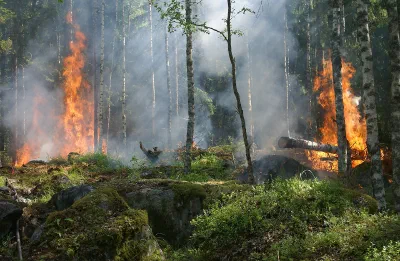
My mother likes to say Pfün alko ak a’olo ikpfu kochakiluñi. “You’re only as strong as your roots.” And Grandmother responds, Kochakiluñu alko ak a’oloñi ikpfu ko’üklatwok. “Your roots are only as strong as your crown.” What this means is that wildfires, even from a distance, can have devastating effects.
So I was surprised when a friend of mine dismissed the idea that fires over 200 miles away could have any effect over the lives of humans and dryads in the Seattle region. She insisted that you had to be a few miles or less from a wildfire to be hurt by it. But you’re only as strong as your roots, and your roots are only as strong as your crown. And wildfires and their smoke and devastation affect all parts of the tree and the forest’s ecosystem.
Even If You Live Far Away, Wildfires Can Affect Your Life
Wildfires, mesmerizing yet menacing, burn through acres in minutes, no matter where you live. People living in suburbs of Redding learned this the hard way when the Carr fire ripped through their neighborhood in 2018. 1
Wildfires aren’t confined to their fire zone; smoke and air pollution are felt hundreds of miles away. Imagine a foggy day, with visibility reduced and the world blurred. That’s how a day can be ‘smoked out’ from wildfires that are 100 - 200 miles away.
Smoke Impacts Everyone
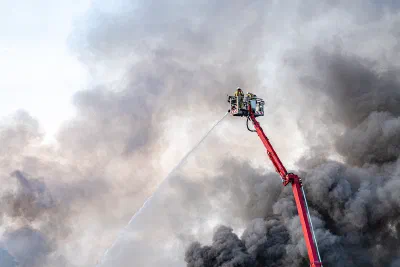
Firefighters using a cherry picker to fight a fire // Image by Matthias Groeneveld from Pixabay
Wildfire smoke isn’t simply gusts of darkness in the air. Unlike the smoke of a campfire, wildfire smoke is pervasive. You can’t simply move around the fire pit to get out of it.
The smoke is chock-full of particles and gases birthed from the materials it incinerates. During a wildfire, the burning trees and vegetation culminate in copious amounts of smoke able to traverse state lines and oceans alike! 2
While a smoky day might set the stage for a captivating photo, those tiny smoke particles wreak havoc by polluting our air. Resulting health problems range from eye and throat irritation to breathing difficulties, particularly endangering people with existing respiratory issues like asthma or allergies. 3
Tracking Wildfires from Space—Technology for the Win
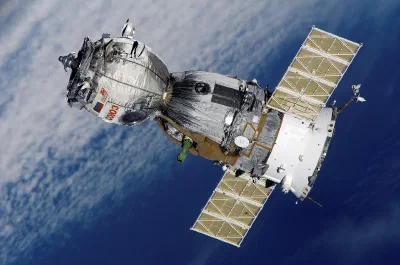
A satellite // Image by WikiImages from Pixabay
In the race against wildfires, space technology provides a crucial edge. Satellites—from those launched by NASA—monitor these fires globally in near-real-time. These high-tech observers estimate location, size, and smoking directions, forecasting the next potential target, even thousands of miles away.
But down here on Earth, technology like wildfire sensors, respirators for fire fighters, and my favorite—data and analytics, can do a lot of good. Sensors can detect hot spots and danger zones before a fire gets out of control. Respirators and other tools to keep fire fighters comfortable allow them to work longer and closer to the conflagration. And the U.S. Fire Administration is developing a new analytics platform called National Emergency Response Information System (NERIS). 4
If Wildfires are Nearby, Protect Yourself and Your Family
It’s paramount to understand that despite the vast distances we often discuss, safety must always come first.
When there’s a wildfire, especially if there are air quality warnings, we can:
- Keep windows and doors shut.
- Limit outdoor exercise if air quality is poor.
- Always have a mask ready.
Listen to local authorities. Firefighters, police, community leaders, and scientists use satellite imagery to assess and manage wildfire scenarios. They help ensure we have ways to cope and stay safe in challenging times.
Taming the Inferno
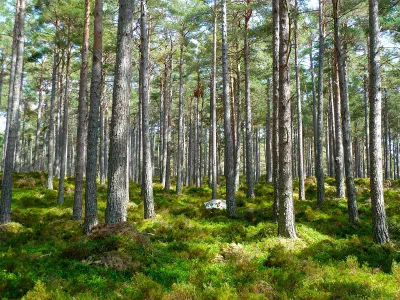
Unburnt trees // Image by Siggy Nowak from Pixabay
The monstrous scale of wildfires may feel overwhelming, with some capable of crossing continents. Armed with knowledge about their behavior, cutting-edge technology and the gallant efforts of first-responders, we can confront fires and keep our family, friends, and community safe. Through collective willpower and responsibility towards the environment, we can prevent wildfires.
Even if a wildfire is hundreds of miles away, its impact reaches us in many ways. Therefore, each effort we take towards preventing wildfires covers miles in our fight against them. Like human personalities, no two wildfires are alike. Our collective strength and wisdom can help manage them.
Klifal, Dear reader and Tsitwash for Reading!
Note: Klifal and Tsitwash are words in Dryadic. Klifal means “Hello” and Tsitwash means “Thanks.”
I hope you enjoyed this article! If you liked my unique perspective, you’ll love reading my full story in the novel Digital Dryad by Jennifer Kyrnin. Digital Dryad is available where all books are sold, in print and ebook formats.
Want more tales straight from the dryad’s mouth? Sign up for my newsletter to receive exclusive short stories, behind-the-scenes looks at Digital Dryad, and advance notice of new book releases in the series.
You can also connect with me and other fans of Digital Dryad on Mastodon. Jennifer is active on Mastodon under the handle @htmljenn. Share your thoughts using the hashtag #digitalDryad!
Thank you for joining me on this journey! With your support, I can continue telling my story. I hope to see you again between the pages and in the newsletter!
Sincerely, Sierra
Stay in TouchCalf’s, J. (2018, July 30). The Carr fire is California’s deadliest and biggest blaze of the year (So far). Here’s what to know. TIME. https://time.com/5352624/carr-fire-redding-california/ ↩︎
Why Wildfire Smoke is a Health Concern | US EPA. (2023, October 13). US EPA. https://www.epa.gov/wildfire-smoke-course/why-wildfire-smoke-health-concern ↩︎
Wilgus, M., & Merchant, M. (2024). Clearing the Air: Understanding the impact of wildfire smoke on asthma and COPD. Healthcare, 12(3), 307. https://doi.org/10.3390/healthcare12030307 ↩︎
Technology to Reduce the Impacts of Wildfires | Homeland Security. (n.d.). U.S. Department of Homeland Security. https://www.dhs.gov/science-and-technology/technology-reduce-impacts-wildfires ↩︎